

You Know Better — So Why Are You Still Living the Same Way?
THE STANDARD SERIES — PART 3 OF 5
A foundational reading series for women who are ready to stop living on inherited settings. If you missed Parts 1 and 2, begin there. This series builds in order.
There is a particular kind of frustration that comes from having enough self-awareness to know your life should feel different by now and still waking up inside patterns that look painfully familiar.
You know what helps you feel clear.
You know what makes you feel grounded.
You know that when your routines slip, your mind gets noisier, your standards lower, your self-respect becomes easier to negotiate with, and yet your life still keeps returning to the same shape.
The same clutter.
The same inconsistency.
The same late nights.
The same self-neglect dressed up as “I’ve just been busy.”
The same private disappointment in yourself that never fully leaves because, at this point, the problem is not ignorance.
The problem is that your actual way of living has not caught up with what you already know.
That gap is exhausting in a very specific way. It is not the exhaustion of confusion. It is the exhaustion of contradiction. You know the standard. You admire the standard. You may even deeply desire the standard. But your daily life still keeps arranging itself around something lower. And after enough repetition, that starts to do something to a woman. It makes her question whether she is actually serious. Whether she is just someone who likes the language of growth more than the practice of it. Whether she is ever really going to become the woman she keeps picturing.
If that is where you are, I want to say this clearly: the issue is probably not that you need more advice.
The real reason you are still living the same way is that knowledge has not yet become embodiment. It has not yet become routine. It has not yet become rhythm. It has not yet become the structure of your ordinary days. And until it does, your life will keep being shaped less by your intentions and more by your defaults.
That is the part most women underestimate. The default is powerful. More powerful than mood. More powerful than the burst of clarity you get after a hard conversation, a church service, a journal session, a reset weekend, or a good piece of content. Your default is what takes over after the feeling passes. Your default is what your life returns to when there is no emotional intensity carrying you. And if your default is still disorganised, comfort-driven, overextended, reactive, or low-discipline, then your life will keep looking old no matter how new your mindset sounds.
You Are Not Stuck Because You Lack Knowledge
A lot of women stay trapped in the same patterns because they keep misdiagnosing the problem. They think they need a better plan. Better apps. Better products. Better motivation. Better morning routines. Better timing. Better energy. But there comes a point where a woman has consumed enough insight to admit that the issue is no longer a shortage of information.
She knows enough.
She already knows enough to sleep better, eat better, move better, speak to herself better, manage her time better, and create an environment that supports the kind of woman she says she is becoming. The issue is not that she has not heard the truth. The issue is that her life is still built around a version of her that does not yet consistently obey it.
That is harder to admit, because now the work becomes less aesthetic and more honest. Less inspirational and more behavioural. Less about what you are learning and more about what your life is still refusing to reflect.
And that is where many women stall.
Because learning feels productive.
Knowing feels mature.
Planning feels responsible.
But embodiment feels expensive.
It costs comfort. It costs excuses. It costs the version of you that still wants transformation without interruption.

Your Life Keeps Returning to What Feels Normal
This is the part that matters. A woman does not automatically live at the level of what she knows. She lives at the level of what feels normal to maintain.
If disorder feels normal, she will keep recreating it.
If inconsistency feels normal, she will keep slipping back into it.
If neglecting herself feels familiar, she will keep calling it a busy week instead of what it is.
If living beneath her own standard feels emotionally familiar, she will keep returning there long after she has mentally outgrown it.
That is why change can feel strangely difficult even when the steps are obvious. It is not always because the steps are hard. Sometimes it is because the old way is familiar enough to feel like home, even when it no longer feels good.
And that is the cruelty of low-level misalignment. It does not usually ruin your life all at once. It just keeps you living beneath yourself quietly enough that you can postpone dealing with it.
You tell yourself you will reset next week.
You tell yourself this season is unusual.
You tell yourself you will get serious once life calms down.
You tell yourself the woman you want to become is still coming, even though your current days are still training the opposite.
Eventually, you have to stop calling that a season.
Eventually, you have to call it a lifestyle.
This Is What “Living the Same Way” Actually Looks Like
t looks like waking up already behind because your evenings have no structure.
It looks like constantly feeling like a woman with potential rather than a woman with proof.
It looks like saying you want peace while your room, your schedule, your diet, your phone habits, and your spending habits keep producing noise.
It looks like knowing your body needs care but only responding once you feel bad enough to be scared into temporary discipline.
It looks like wanting elegance, order, consistency, and softness while repeatedly living in ways that make all four much harder to sustain.
It looks like being emotionally attached to the image of your next level while remaining behaviourally loyal to your current one.
That last one is where the real problem often sits.
Because many women do not only need better habits. They need to break loyalty to a version of themselves that has become far too comfortable being under-formed.
The Hard Truth: You Are Practising Your Current Life
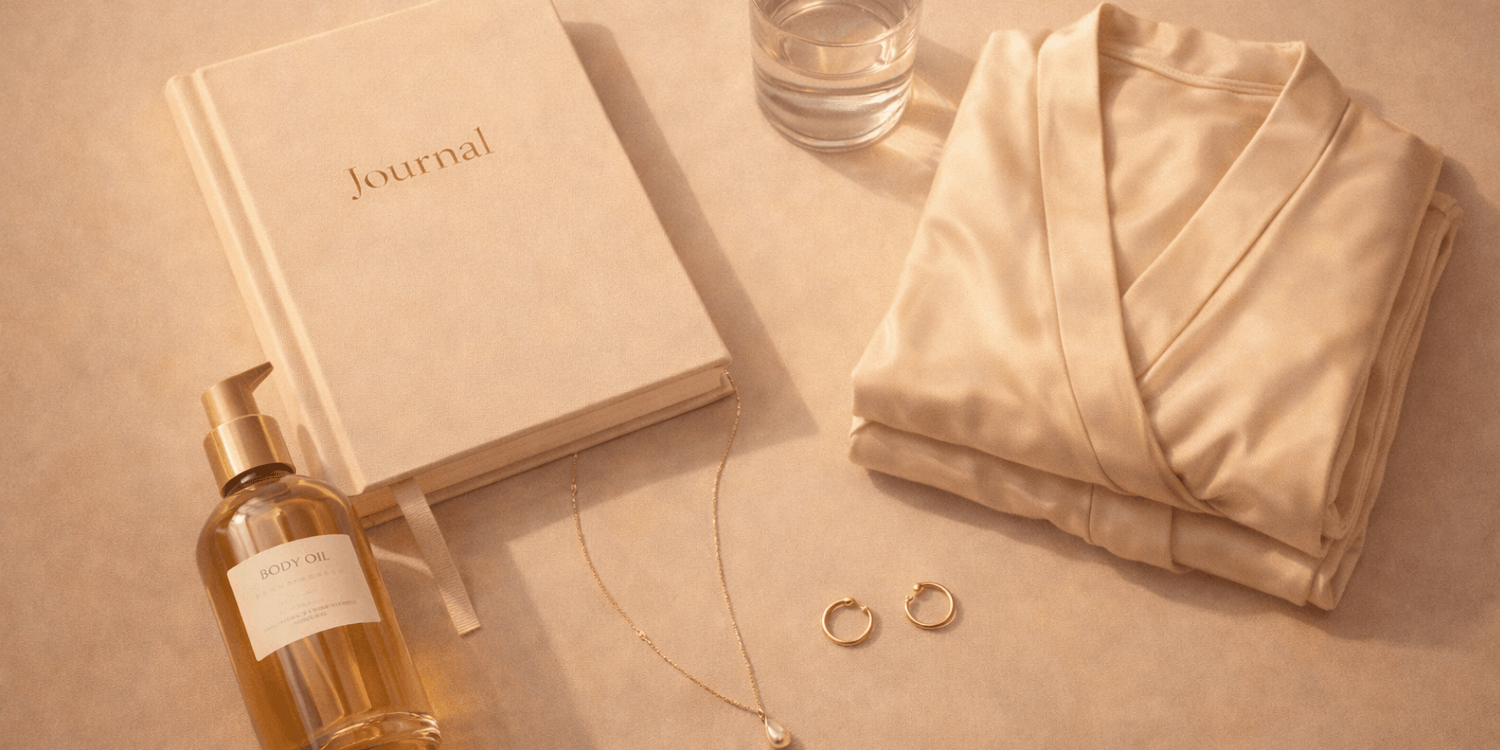
Every day you repeat a way of living, you are rehearsing it.
You are making it easier. More natural. More automatic. More believable.
That means you are not just “having a few off days.” You are often practising a standard.
That is why this conversation belongs under The Body. Because the body keeps score in ordinary ways. In sleep. In food. In posture. In pace. In energy. In what you repeatedly tolerate. In what your nervous system has adjusted to calling normal. The body reflects what your life is repeatedly doing to it, and if your daily living keeps communicating chaos, overextension, inconsistency, and delay, your body will respond accordingly.
This is one of the reasons The Savvy Sistar Standard goes beyond vague self-improvement and pushes into actual standards for body, time, mind, and life structure. It is not enough to admire the life. You have to build conditions that make it possible.
Because eventually, the question is not “Do I know better?”
The question is “What am I rehearsing every day?”
And if the answer is still the same life, the same delay, the same lack of care, the same weak rhythm, the same self-neglect, then that is what your life will keep becoming more fluent in.
Why Change Feels So Hard Even When the Answer Looks Simple
Because simplicity does not remove resistance.
A woman can know that sleeping earlier would help. Drinking water would help. Walking daily would help. Cleaning her room would help. Managing her phone better would help. Praying before scrolling would help. Cooking more would help. Preparing the night before would help. Spending less impulsively would help. She can know all of that and still not move.
Why?
Because the real battle is usually not intellectual. It is emotional, behavioural, and environmental. The old way has grooves in it. It asks less in the moment. It lets her delay. It lets her disappear into comfort. It lets her postpone becoming visible to herself in a more serious way.
And that matters.
Because there is a version of change that women say they want, but only as long as it remains beautiful, aesthetic, and emotionally flattering. The real version is quieter than that. It looks like repetition before results. It looks like doing what supports you before you feel transformed by it. It looks like becoming a woman whose life starts to reflect order before she feels fully like an ordered woman.
That is why so many women stop. They want evidence first.
But the evidence comes after the repetition.
You Do Not Need a Reinvention. You Need a Different Daily Life
This is where many women sabotage themselves by making the rebuild too grand. They think they need an entirely new personality, a complete reset, a dramatic transformation, a perfect routine, a new season, a sign. They do not.
They need a different Tuesday.
A different evening.
A different first hour of the morning.
A different relationship with their phone.
A different standard for what “good enough” looks like in their room, their body, their food, their money, and their time.
A different daily life is what creates a different identity.
Not the fantasy of change. The repetition of it.
And this is exactly where the workbook becomes useful, because The Standard Workbook forces a woman to stop circling the same vague awareness and get specific about where her life keeps contradicting what she claims to value. It brings the issue out of her head and onto the page.
Then the challenge becomes necessary, because once clarity arrives, it has to become rhythm. The 10-Week Standard Challenge exists for that exact reason. Not to inspire you temporarily. To train you long enough that the standard starts showing up in your actual life.
Before You Go
You are not still living the same way because you are incapable of change.
You are still living the same way because your life is still organised around what is familiar to maintain, not what is true for your next level.
That can change.
But it will not change because you had one more moment of insight.
It will change when your days stop serving your old self more faithfully than your future one.
That is the real work.
Not admiring the standard.
Not speaking the standard.
Not planning the standard.
Living in a way that makes the standard harder to escape.
Because the woman you are becoming is not built in theory.
She is built in what your ordinary life keeps repeating.
Reflect on this before you move on:
What part of your current daily life is still rehearsing a version of you that you say you have already outgrown?
Continue in The Standard Series:
Previous Post: You Have Standards. So Why Does No One Take Them Seriously?
Next Post: You Didn’t Choose Your Standards. You Inherited Them.
Download Before the Standard — your first step toward seeing what your daily life is still reinforcing
Everything in one place: Beacons
Growth is intentional. It is built over time. And your life will keep reflecting what you rehearse most.
Savvy Sistar 🤎